
November is Native American Heritage Month
|
|

California Becomes First State to Require Insurers to Provide Maternal Mental Health Case Management
A positive depression or anxiety screen is only useful if it leads to care, and that handoff is where patients often get lost. California recently put a model for that coordination into law. Senate Bill 626, signed last month, is the first law in the nation requiring health plans and insurers to provide case management or care coordination for patients who screen positive for a maternal mental health condition during pregnancy or postpartum. The law describes support such as identifying treatment providers and community supports, navigating behavioral health services, scheduling appointments, helping patients get prescribed medications, following up with patients regularly, and facilitating communication between obstetric and behavioral health providers. Even for practices outside California, it’s a useful picture of the coordination a positive screen should trigger.
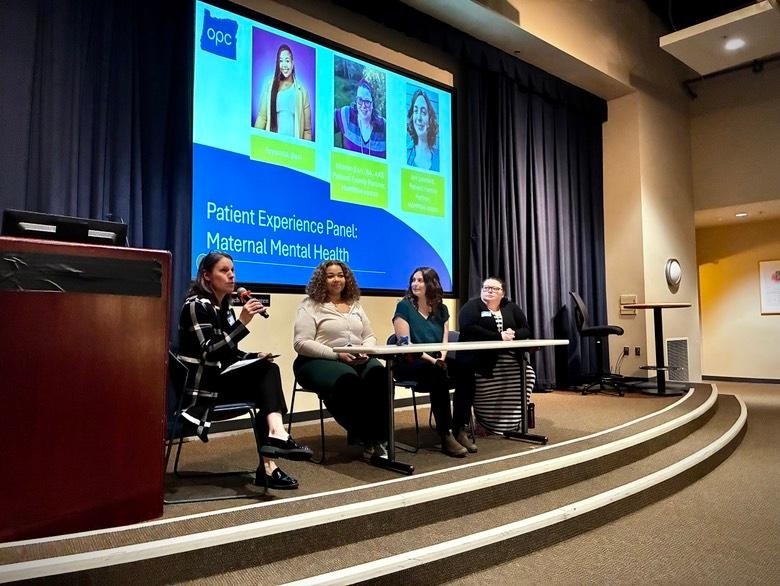
And we were reminded during the patient panel on perinatal mental health at the 2026 OPC Summit that screening does not always translate into identifying patients with needs, so ensuring all patients are aware of the resources available is important.
Reminder: Delving into Maternal Mental Health Fall Series
The Maternal Mental Health Leadership Alliance’s four-part webinar series started in September and will run through December. This series is designed specifically for healthcare and mental health providers, public health professionals, policymakers, and people with lived experience in their role as advocates. You can watch the September and October recordings and learn more and register for the remaining webinars here.
Perinatal Substance Use Disorder (SUD) Initiative
The 16-month perinatal SUD initiative is underway! Sites are forming their multidisciplinary teams, including reaching out to organizations in their communities that care for patients with substance use disorder, and identifying peer doulas or people with lived experience to be part of their project team. They are also gathering baseline data and identifying priority areas of opportunity in their sites.
October’s meeting highlighted the prevalence of co-occurring psychiatric disorders with substance use disorders and the importance of considering previous trauma many patients have. In addition to simple strategies to use in daily care (sitting down at patient level, giving people agency and choices, providing context for questions and care, etc.), the group also discussed the lifesaving role that medication for opioid use disorder plays in patients with opioid use disorder. The teams will gather in person in November to continue their important work.
Contact Ana Sassano at asassano@comagine.org if you have any questions!
Perinatal Substance Use Disorder (SUD) Activities and Resources Webinar Series
The OPC Perinatal SUD Webinar Series, which is free and open to all, kicked off with an excellent presentation titled Trauma, Substance Use and the Brain by Dr. Mandy Davis from Trauma Informed Oregon. The recording is available now, and we encourage all to watch it. The recording and presentation materials can be found on the OPC website under Event/OPC Webinars.
The next webinar, co-hosted with Oregon Association of Women’s Health, Obstetric and Neonatal Nurses (AWHONN) is Transforming Care for People with SUD in Pregnancy/Postpartum with Diana Smith, and will be on November 3 from 12-1 p.m. Register now!
More information will be coming soon about additional webinars in 2027!
Perinatal SUD Resources Map
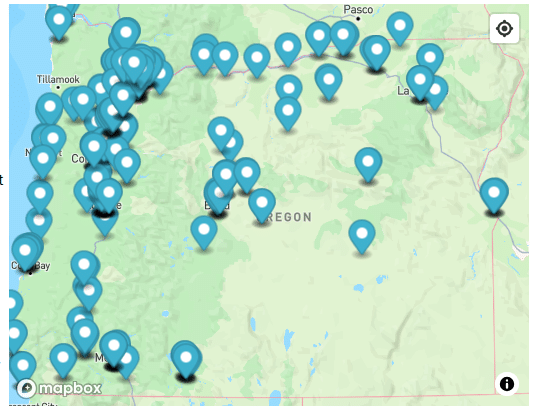
The OPC Substance Use Disorder Resources Map is now live! Check out the interactive tool here, where new or expecting parents can find resources, programs, and treatment options near them. Users can search by the type of resource they are looking for or by their location. If you have any feedback about the map, let us know here! 
Oregon 24/7 OB Addiction Advice Line
The Oregon Health & Science University (OHSU) launched a statewide 24/7 Addiction Advice Line on Aug. 1, 2026. This line will offer consultation for all treatment settings where pregnant and postpartum patients are receiving care, including hospitals, outpatient clinics, and specialty addiction treatment settings, and will serve all health care staff at those sites.
For more information, including how to access the hotline, review the information on the OPC website and share broadly with your teams. This
program is funded by the Rural Health Transformation Program.
Coordinated Congenital Syphilis Prevention Webinar Series
OPC, in partnership with Comagine Health and funded by the Oregon Health Authority, is leading a statewide effort to prevent congenital syphilis through coordinated screening, treatment, and follow-up of pregnant patients in emergency department and community settings. This webinar series offers setting-specific best-practice guidance developed with Oregon emergency departments, local public health authorities, and community partners. Each session is scheduled for 12 p.m. PT.
- Emergency Departments (December 7, 2026): Many congenital syphilis cases involve patients who had an ED visit but little or no prenatal care. Drs. Irina Cassimatis and Jack Marshall cover pregnancy identification at triage, screening algorithms, and capturing contact information for public health follow-up. Register | Poster
- Local Public Health Departments (December 9, 2026): Strategies for strengthening collaboration with EDs and community organizations, including monitored referral contacts, streamlined staging and treatment orders, field-based care, and benzathine penicillin G access. Register | Poster
- Community Organizations (January 11, 2027): How CBOs can support risk identification, linkage to testing and treatment, and completion of multi-dose regimens, with Oregon outreach models such as syringe services integration, shelter- and encampment-based outreach, and incentives. Register | Poster
Prenatal Providers (January 20, 2027): A review of state recommendations on screening frequency, interpreting serologies (including discordant reverse-sequence results), treatment timing and adequacy, and coordinating with public health for patients first identified in the ED or on labor and delivery. Register | Poster
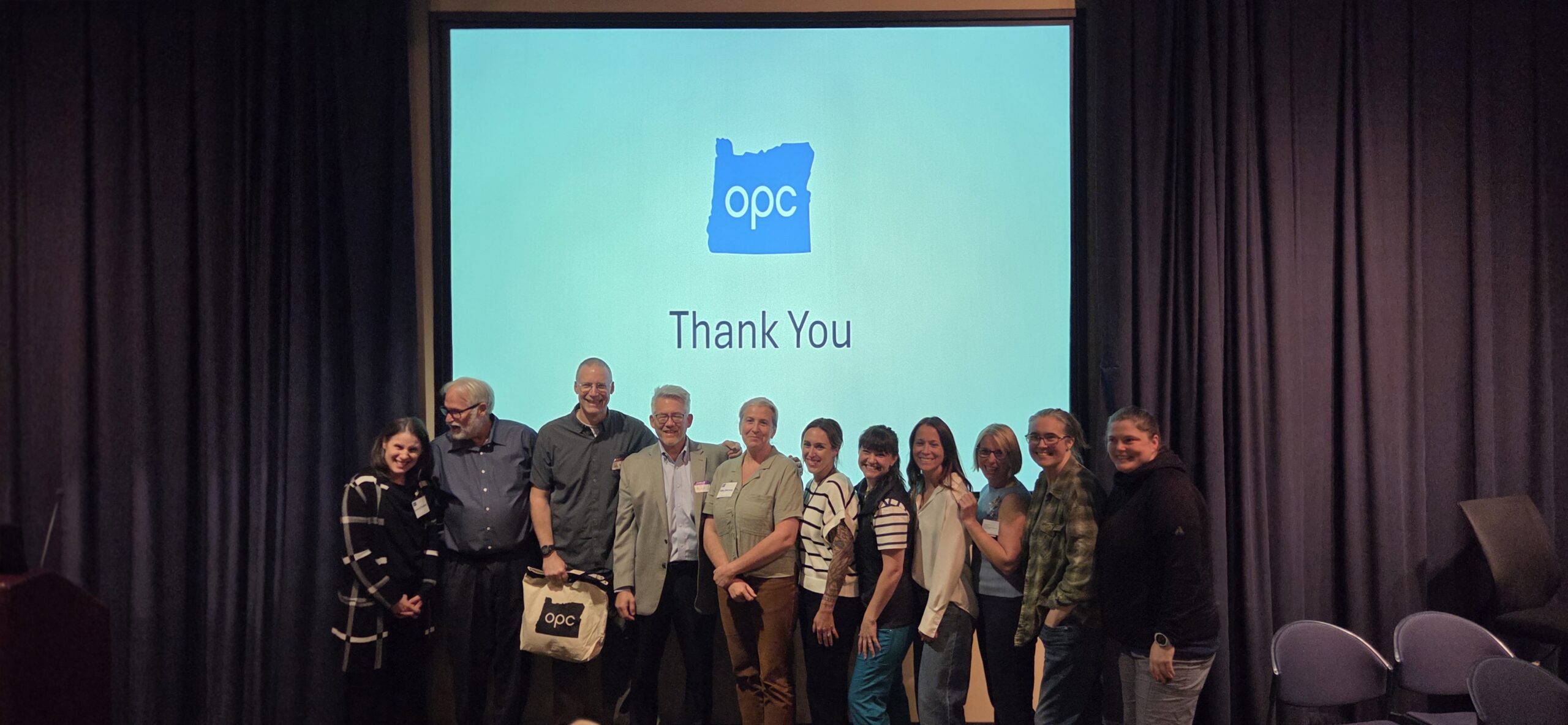
Celebrating the 2026 OPC Annual Summit
|
|
OPC Mobile Simulation Program
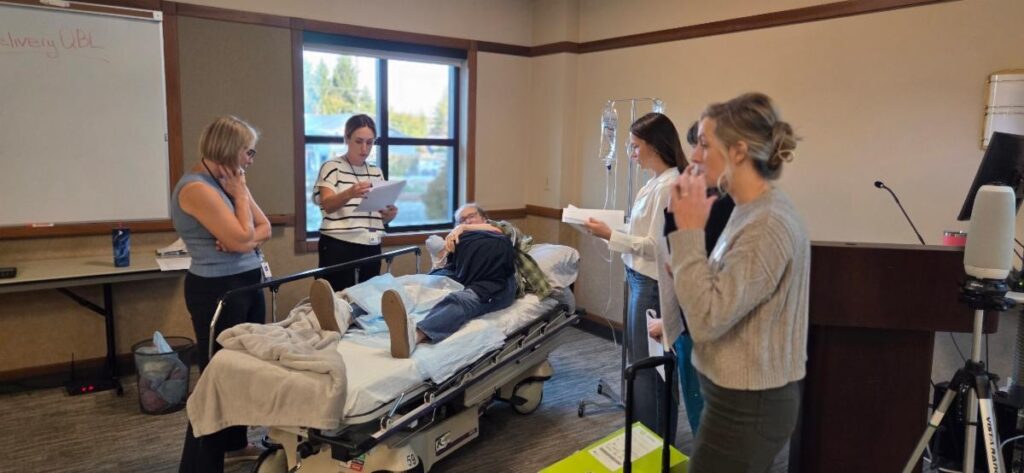
The OPC Mobile Simulation team reached their first milestone of completing 15 simulations at 10 sites, and now simulations are being scheduled into 2027! This work is funded by the Rural Health Transformation Grant and supports rural hospitals, with an emphasis on high risk, low frequency events that are drivers of maternal and newborn morbidity and mortality in Oregon, such as OB hemorrhage, hypertensive crisis, newborn resuscitation and more! The program will also provide a simulation playbook (to be released in 2027) for teams to support simulations between the OPC visits.
Oregon Maternal Data Center Corner

Stay tuned for helpful tips, success stories, and practical ways to make the most of the OMDC. If you have an OMDC-related experience you’d like to share in the Oregon Perinatal Collaborative Newsletter, please contact Ana Sassano at asassano@comagine.org.
NTSV C/S
Do you know where your greatest opportunity for NTSV C/S is at your site? Do you know if there are race and ethnicity disparities in C/S outcomes?
We were thrilled to have Christa Walczak at the 2026 OPC Summit and she highlighted some important Oregon Maternal Data Center (OMDC) tools that we wanted to remind folks about.
To help improve NTSV overall rates and address disparities by race and ethnicity, teams can access a number of tools within the Cesarean Birth: NTSV measure starting with helpful comparisons to the Healthy People 2030 target, peer hospitals, all hospitals in Oregon, and aggregate rates of OMDC or MDC overall.
The “Measure Analysis” tool within the NTSV measure allows teams to understand what is driving their overall NTSV C/S rate, including looking at rates by subpopulations listed below so you can prioritize your quality improvement efforts:
- Labor type (spontaneous, induced, no labor)
- C/S indications
Comparisons by provider and provider group also allow for identification of potential champions for this work and learning from one another. While attribution is never perfect, tools within OMDC allow for tracking by delivering providers and labor care providers to account for different call coverage.
Last, but not least, teams can track their NTSV C/S rates by race and ethnicity, both within the comparisons page of the NTSV measure, as well as within the “Race and Ethnicity PDFs” that are accessible from the home page. These PDF reports can track trends over time as well as provide guidance on interpretation.
Oregon Perinatal Collaborative
Subscribe to our newsletter
Related Articles
Newsletters & Press, OPC Newsletter