| Monday, March 16 | Noon-1 p.m.
Join us for a webinar to learn about improving ICD-10 coding for perinatal substance use disorder metrics
As teams across the state work to improve the care and outcomes for patients with substance use disorder (SUD) in pregnancy, reliable data is critical to know whether our efforts are making a difference. ICD10 coding is used for many metrics, and this webinar will focus on the key diagnosis codes for SUD and practical tips for both clinical documentation and coding practices to improve the accuracy and reliability of these codes.
Learn more and register here.
Naloxone Sprint
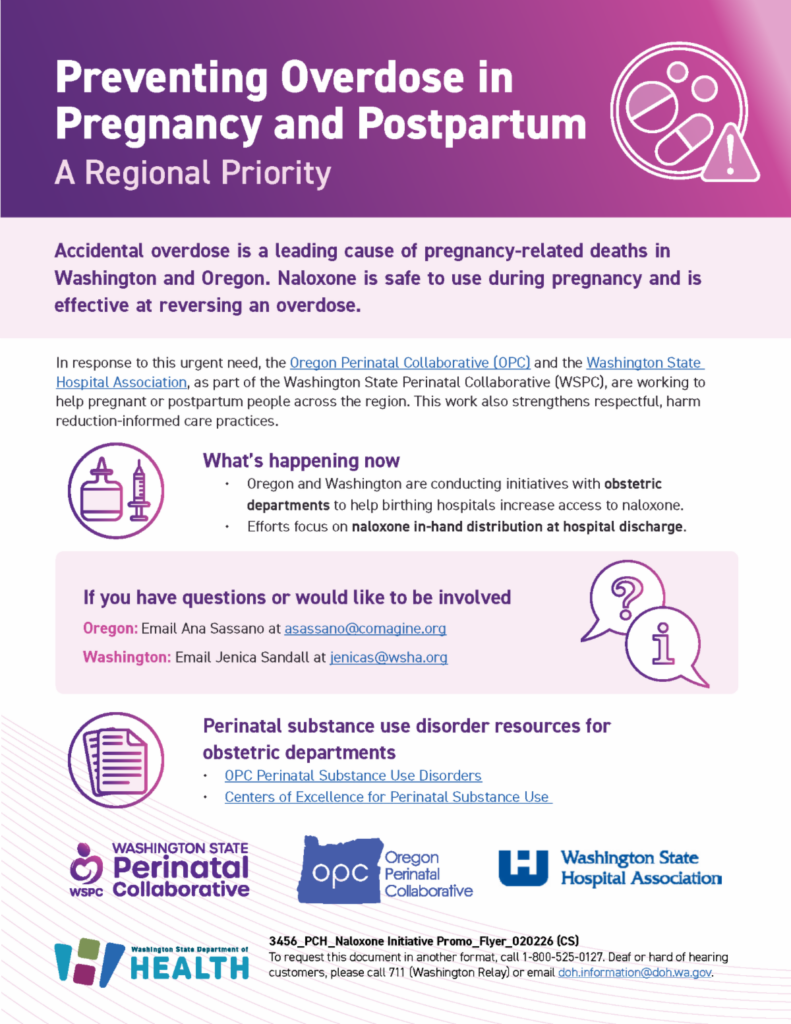
The four-month naloxone quality improvement sprint is underway! Seventeen teams across Oregon are enrolled to either implement or refine their existing processes for naloxone distribution to patients at risk of overdose on discharge from perinatal units. An Oregon Perinatal Naloxone Toolkit is now available on the OPC website for use by all. Focus areas for teams working in the sprint this month include optimizing patient education and confirming that reliable billing processes are in place. Since kickoff, teams have been sharing helpful order sets and lessons learned from initial implementation.
Mental health conditions, including SUD/overdose, are the leading causes of pregnancy related death in Oregon, and naloxone saves lives! All teams across the state are encouraged to review the toolkit and address local opportunities, if identified. This one-page patient education sheet addressing how to recognize and treat an overdose is included in the toolkit and can be added to after visit summaries or posted in clinics/hospitals.
Perinatal SUD Initiative
As a reminder, beginning September 2026 teams will have an opportunity to participate in a quality improvement initiative that will support implementation of the full Substance Use Disorders in Pregnancy and Postpartum Toolkit, addressing stigma and bias on perinatal units, universal screening for SUD on perinatal units, common pain points in labor and delivery, and so many other topics! Formal enrollment will open up this spring/summer, but teams and team members can complete the Intent to Participate Form now.
Perinatal SUD Tools
As a reminder, the following tools are now available to support local work to optimize care of patients with substance use disorders.
· The Perinatal SUD Toolkit has been updated to include additional resources and incorporate important feedback from experts.
· There are multiple audience-specific tools now available for behavioral health/treatment, clinics that provide prenatal/postpartum care, lactation, pediatric, peer support/doula/traditional health worker, and social work.
· There is a brief document with resources for additional team members such as anesthesia, emergency departments, IT/informatics, payor/CCOs, pharmacy and security.
· The OPC and OHA recently updated the 2018 Oregon Pregnancy and Opioids Workgroup Recommendations which will be available soon.
· Reminder: We have multiple videos available on the OPC website, including mothers in recovery sharing their experience with perinatal health care, as well as example screening and vignettes. |