
Coordinated Congenital Syphilis Prevention
Responding to the congenital syphilis crisis in Oregon
Congenital Syphilis Prevention
Responding to the congenital syphilis crisis in Oregon

Background
Oregon is in a congenital syphilis (CS) emergency. Although overall syphilis rates in Oregon have recently decreased, syphilis diagnosed during pregnancy is increasing, resulting in more infants affected by this preventable disease. As of 2024, the state’s CS rate increased 2,150% in a decade, with cases now reported across 12 counties and nearly half occurring outside the Portland metro area (Singson, 2025). Congenital syphilis occurs when untreated infection in the pregnant individual is transmitted to the fetus and can result in miscarriage, prematurity, low birth weight, congenital anomalies, stillbirth and infant death; up to 70% of untreated infections lead to adverse pregnancy outcomes (Duan et al, 2025).
Despite being preventable with timely screening and treatment, congenital syphilis remains a significant issue. In Oregon, 75% of pregnancies associated with a case involved minimal or no prenatal care; fewer than half were diagnosed in time to prevent transmission, and only 26% received timely treatment (Singson, 2025). Many of these patients had contact with the healthcare system, specifically in emergency departments or community settings, but were not screened. The burden of syphilis also disproportionately affects pregnant people of color, those experiencing housing instability, criminal justice involvement, substance use, and/or have a history of STIs.
Oregon Health Authority Congenital Syphilis Resources
Coordinated Congenital Syphilis Prevention
With support from an Oregon Health Authority (OHA) Public Health Equity Grant, the Oregon Perinatal Collaborative (OPC) and Comagine Health are advancing coordinated congenital syphilis prevention by strengthening partnerships across emergency departments, county health departments, and organizations serving those experiencing houselessness and substance use disorders. The goal of this project is to improve syphilis screening and ensure timely, adequate treatment during pregnancy.
A cross-disciplinary workgroup is currently developing best practice guidance tailored to each setting, with outreach to emergency and county health departments beginning in summer 2026.
In 2023, OPC worked with OHA and the Oregon STD Program to create congenital syphilis best practice recommendations for Oregon prenatal care providers. OPC is now focused on ensuring syphilis screening efforts reach all pregnant people in Oregon, including those not engaged in prenatal care.
Resources
Additional Resources
- Clinical Interpretation of Syphilis Screening Algorithms
- Prenatal Syphilis Screening, Staging, and Management
- Oregon Confidential Online Syphilis Reporting Portal
- CDC Syphilis Treatment in Pregnancy Recommendations
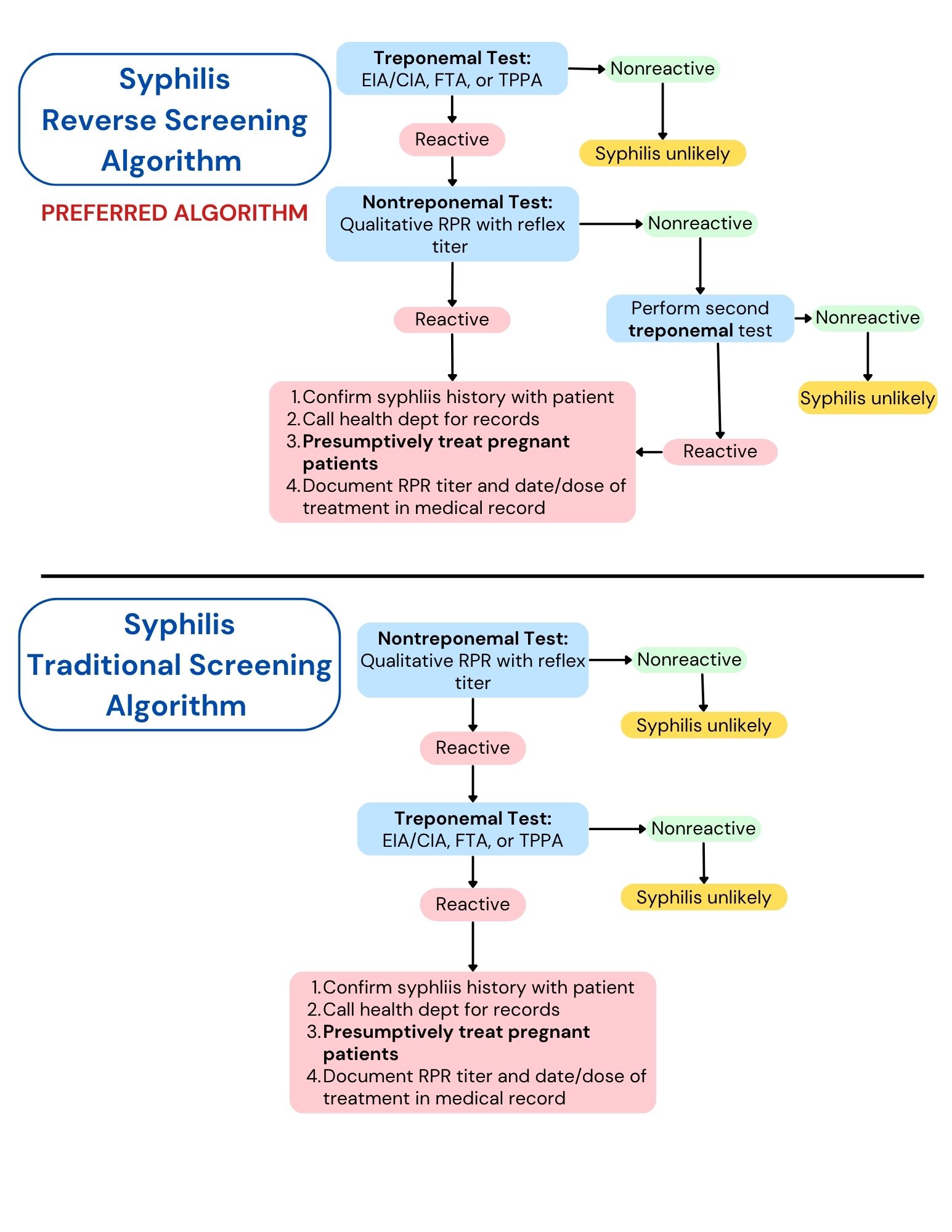
- Syphilis Serology Screening Workflow (Reverse and Traditional)
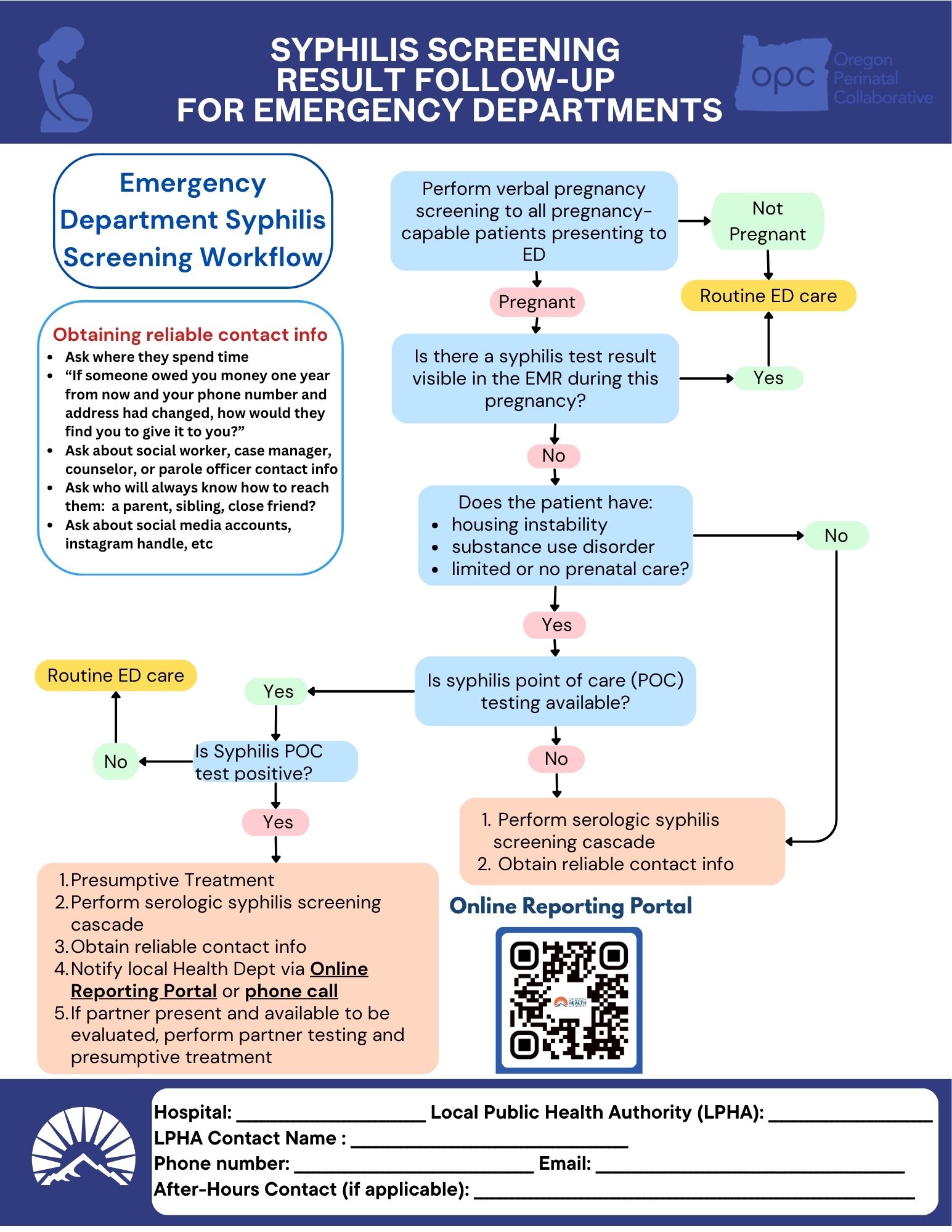
- Emergency Department Syphilis Screening Workflow
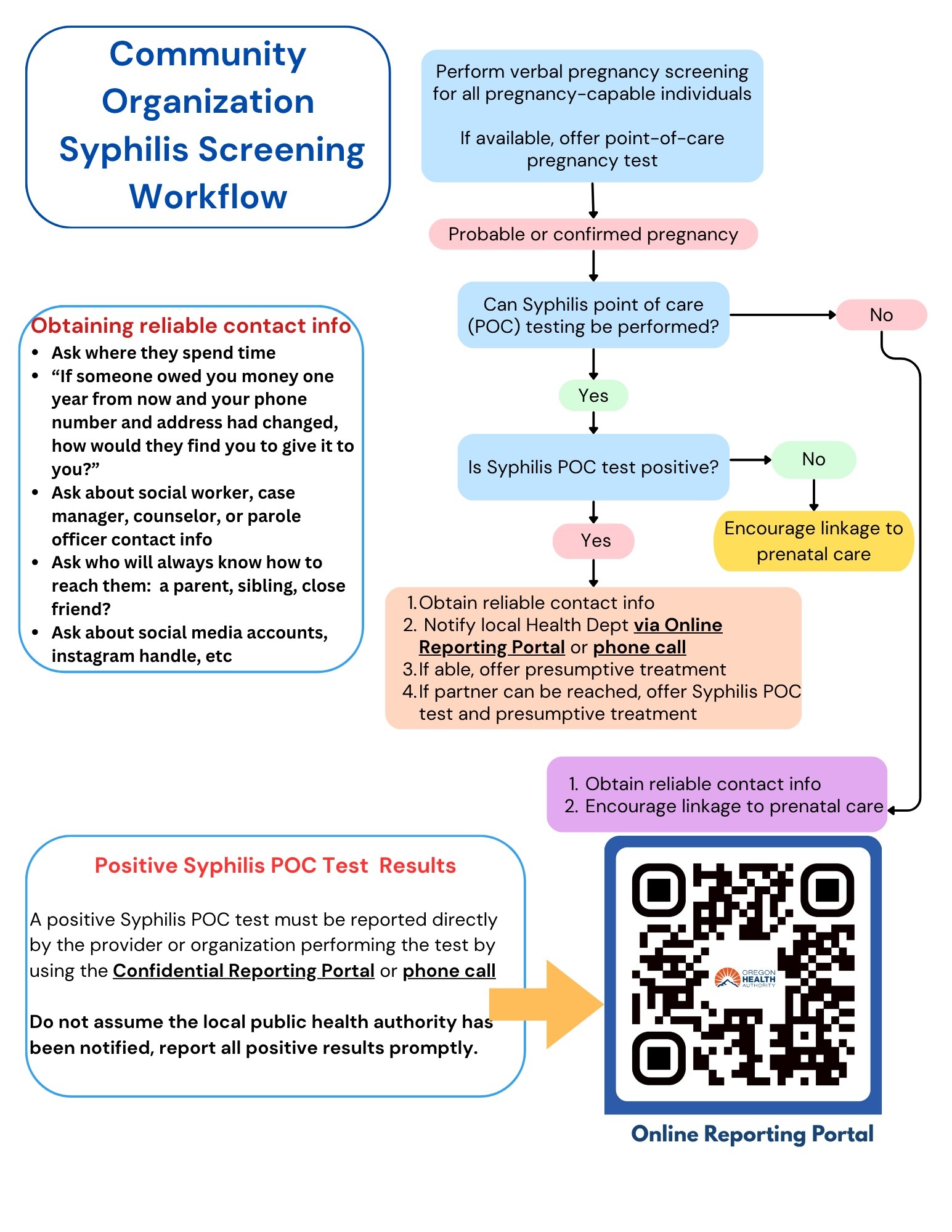
- Community Organization Syphilis Screening Workflow
Content Last Updated: August 11, 2026
If you have any questions or suggestions relating to this work, please reach out to the contacts listed below: